

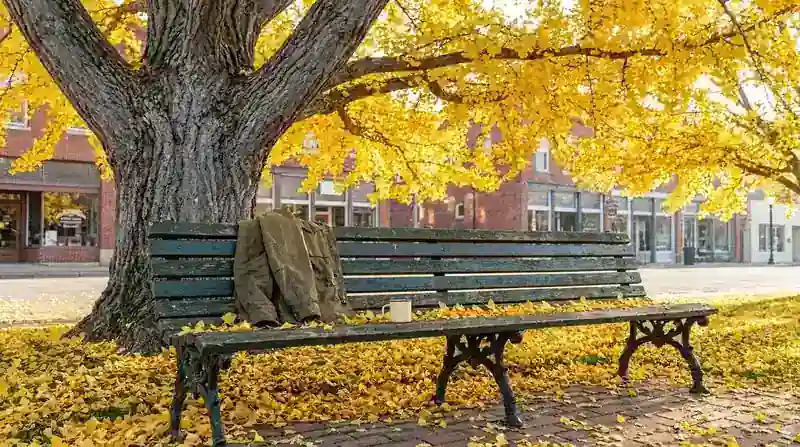
 Bench No. 7 · The Oldest Tree
The Bench Under the Corner Ginkgo, and the Leaf Pressed in My Field Guide
A retired timber cruiser sits each morning under the one tree he has never misnamed. The bottle a neighbor wrote down, its one-line label, the honest research and the 30-day terms, read line by line.

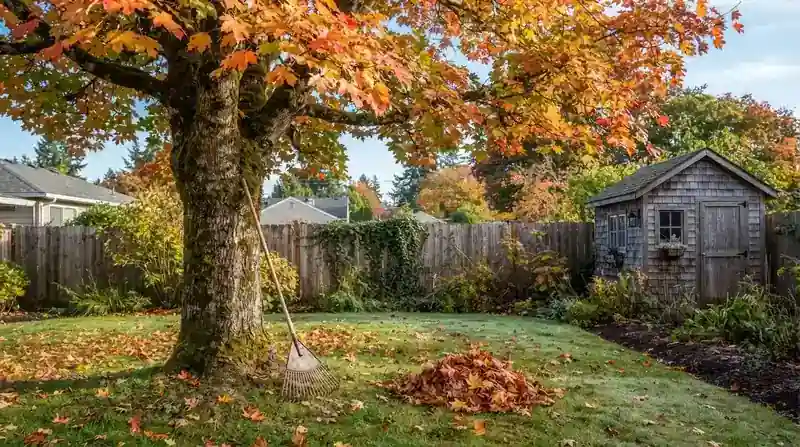
On the second Monday of last October, I stood in my own backyard in front of a tree I planted in 1989 and could not tell you its name.
I knew the bark and I knew the leaf, big as a dinner plate, five lobes, already turning the color of a pumpkin.
I knew I'd dug the hole myself the spring Kate started kindergarten.
The name sat right there behind my teeth, the way a word does when it's decided to make you wait for it.
I stood with a rake in one hand for most of a minute, and the yard was very quiet.
It came back on the walk to the mailbox: bigleaf maple, Acer macrophyllum. I said it out loud to the mailbox, like a man who had found his keys in the refrigerator.
I'm sixty-eight.
For forty years I cruised timber in the mountains of southern Oregon, which means I walked into forests with a clipboard and named every tree I passed, all day long, for a living.
So that minute with the rake did not feel small to me.
A man who named ten thousand trees a season had just lost one in his own yard, and he lost it to the tip of his tongue.
This is a column about a bench and the tree it sits under.
It's also about a pressed leaf, an index card in a neighbor's handwriting, and a small amber bottle from an herb house about an hour from where I used to work.
If you've ever stood in front of something you've known all your life and waited for its name, you'll know most of this already.
You just haven't seen a timber cruiser write it down on a tally sheet.
Forty Years of Naming Trees for a Living
A timber cruise is an inventory, nothing fancier than that. Before anybody sells, thins or leaves a stand of forest alone, somebody has to walk it and write down what's standing there.
That somebody was me, from 1980 until my knees retired me in 2020.
I carried a diameter tape, a clinometer, a paint gun, and a yellow field book that didn't mind the rain.

The job is simple to describe and hard to do well.
You walk a line through the woods, stop at a plot every so many chains, and tally every tree inside a circle you can't see.
Species, diameter at breast height, height, and a defect call. Douglas fir, twenty-two inches, a hundred and ten feet, a little rot at the butt.
Then the next one, and the next, until the plot is done and you walk on through the salal and the poison oak to the next stake.
On a good day I named somewhere around eight hundred trees before lunch.
I named them by their bark from fifty yards, by their needles in the duff when the tops were lost in fog, and by their smell when I couldn't see them at all.
Incense cedar smells like a pencil drawer.
Ponderosa bark in the afternoon sun smells like butterscotch, if you put your nose right into the plates, and every cruiser I ever trained has done it once and laughed.
You don't learn that from a book. You learn it the way you learn your own family's voices, by being around them every day until you can't not know them.
That's why the maple bothered me so much.
It wasn't a fact I'd misplaced; it was a member of the family who had walked into the room and I couldn't say his name.
The Small Misses I'd Been Filing Under "Weather"
Once the maple happened, I did what a cruiser does when a number looks wrong. I went back over the plot.
And the plot, honestly, had been showing me things for a couple of years that I'd been filing under weather, or age, or Marjorie moving furniture.
The first entry was the keys. I've hung my truck keys on the same nail by the back door since 1994, and three times that summer they turned up somewhere else:
the porch rail, my jacket, and once the bread box.
The second entry was Gus.
Gus has run the hardware store on Fourth Street for thirty-one years, and I've bought every hinge and every sack of fence staples in my life from him.
In August I walked in, he said good morning, Harlan, and for one long second I could not have told you his name if you'd offered me a new chainsaw.
I said "Morning, partner," which is what men in my part of the country say when they've lost a name. Gus just smiled, and I think he knew.
The third entry was Marjorie's list.
She wrote eight things on the back of an envelope, I left the envelope on the truck seat, and I came home with four of them plus a bag of birdseed nobody asked for.
The fourth was the crossword. For twenty years I've done the Sunday puzzle in pen, and that fall I started doing it in pencil and leaving corners empty.
I'd have caught all four on a cruise in one morning.
A crew boss who loses his keys, his list and a name in one season gets a talk from me at lunch, kindly, but a talk.
In my own life, I needed a bigleaf maple to stand in my own yard and wait for me before I'd look at the tally.
What I Spent Before Anybody Pressed a Leaf
I want to be honest about the months before Irene's leaf, because columns like this usually skip that part.
A story that only lists what worked is a sales flyer in a flannel shirt.
So here's the tally, with prices, the way I'd have written up a cruise that came in over budget.
Item one: two books of large-print crosswords, $11.98 for the pair. I did them at the kitchen table every evening for a month.
I got very good at large-print crosswords. The keys still went to the bread box.
Item two: a phone app that promised daily "brain games" for $7.99 a month. It had a cartoon owl that congratulated me on matching colored shapes.
I'm a grown man who once outran a sow bear on a logging road. I cancelled the owl in the second month.
Item three: a pocket voice recorder, $39. The idea was to say things into it so I wouldn't lose them.
I lost the recorder. Marjorie found it in October, in the pocket of a coat I don't wear, and it held one message: me saying "birdseed" in a very serious voice.
Item four: a sack of "focus" coffee pods from a television ad, $24. They tasted like the bottom of a percolator at a fire camp, and they kept me up until two.
Item five, the costly one, cost no money at all: I stopped going to the Thursday breakfast at the Grange hall.
Too many names at one table, and I'd decided it was easier to stay home than to say "partner" six times before the eggs came.
That was the worst line on the whole tally.
When you skip the people so nobody sees you reach for a name, your world gets smaller one Thursday at a time.
Add it up and I'd spent about $90 in a season on things that didn't move anything, plus five Thursday breakfasts I won't get back.
I tell you the number because I'd guess you have a number of your own, and you've never added it up either.
The Oldest Tree on the Square, and the Bench Beneath It
There's a bench on the northeast corner of our courthouse square, green paint over gray wood, with iron legs that the county repaints every other spring.
Above it stands the oldest ginkgo in town. The historical society's brochure says it went in around 1911, which makes it older than the courthouse it shades.
I started sitting there in the mornings the year I retired.
A man who spent forty years in the woods does not do well on a couch, and the bench is eleven minutes on foot from my front door.
I'll tell you about the tree, because a cruiser can't help himself.
Ginkgo is the last of its line, the only species left of a whole family of trees that was already old when the dinosaurs walked under it.
The leaf is like no other leaf on the square.
It's a little fan, with veins that run straight out from the stem like the ribs of a paper fan, and most leaves have a notch in the top edge that splits them into two lobes.
That notch is where the name biloba comes from. Two lobes, one leaf, and once you've seen it you will never mistake it for anything else.
That's the first reason I sit there, if I'm honest with you. On the mornings the other names went quiet on me, that tree's name never once made me wait.
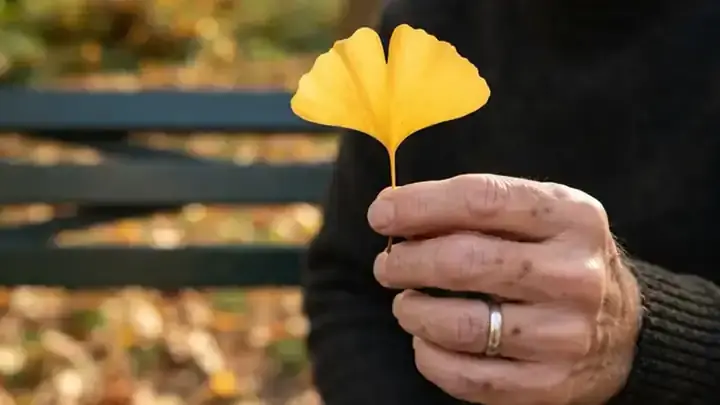
The second reason is what that tree does every November. A ginkgo doesn't drop its leaves a few at a time like a maple;
it holds them all, gold as a school bus, until the first hard frost.
Then it lets go of nearly all of them in a day or two. You walk past on a Tuesday and it's a gold tree;
you walk past on Thursday and there's a gold carpet on the bricks and a bare gray tree above it.
I've watched it do that six autumns in a row now, within a week of the same date each year. It's the one tree on the square that never forgets autumn.
I'll admit it took me a while to see why that mattered to a man who'd just lost a maple.
A tree that keeps its appointment every year, without fail, is good company for somebody who's started missing a few of his own.

What a Reference Librarian Leaves on a Bench
Irene Castellano is seventy-two and spent thirty-four years at the reference desk of our county library. She has answered, by her own count, something over two hundred thousand questions from the public.
She sits on the ginkgo bench on Tuesdays and Thursdays, with a thermos and whatever she's reading.
For three years we shared the bench and the weather and not a great deal else.
She noticed the Grange breakfasts before I'd told anybody why I'd stopped going. A reference librarian notices when a regular stops coming in; it's practically the job.
One Thursday in November, the week the tree let go of its leaves, she asked me straight out. I told her what I'd told everybody:
it's nothing, it's just age and the names.
She looked at me the way she must have looked at a patron who swore he'd returned the book.
Then she said, slowly, as if she were reading a call number: "Age explains the names, Harlan. It doesn't explain why you stopped going to breakfast."
That sentence sat on the bench with me a long time after she'd packed up her thermos.
The next Tuesday, my field guide was lying where I'd left it on the slats, and there was something pressed between the pages.
It was a ginkgo leaf, flat and gold, and an index card in a librarian's tidy printing.

I read that card three times on the bench. Then I did the cruiser's thing:
I put it in my shirt pocket and decided I'd check every line on it before I let it anywhere near a glass of water.
Did you find the card, or did the wind get it?
6:48Found it. It's in my shirt pocket until I've read the label myself.
6:52Good, that's what I'd tell any patron. Breakfast is Thursday at seven.
6:53I'll be there. Save me the chair by the coffee urn.
6:55Why a Librarian Hands You a Call Number, Not a Promise
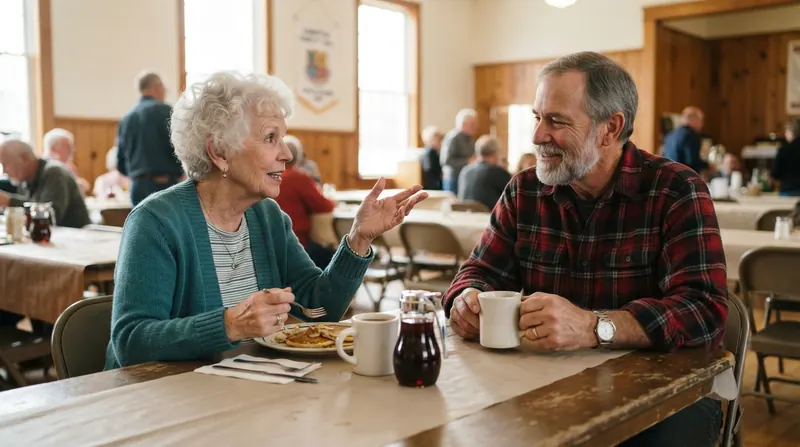
That Thursday I went back to the Grange breakfast, partly because Irene had earned it and partly because I wanted to cross-examine her.
Between the pancakes and the second cup, while Lyle was arguing with the cook about the bacon, I asked her where the card had come from.
Her answer was plainer than I expected.
Her late husband Tomás had a cousin who worked summers on an herb farm near Williams, down in the Applegate country, and the family had kept a bottle of that same ginkgo in the kitchen for years.
"I'm a reference librarian," she said. "I don't recommend books; I hand people the call number and let them read it for themselves."
She said she liked that particular bottle for a reason I understood right away: "It's one plant on one line, and I can read the whole label without my glasses."
She'd also looked it up, the way she looks everything up. "The research is thin, Harlan, and I'm not going to pretend it isn't.
I'm telling you it's a leaf from the tree you sit under, and a reason to sit there in the morning with a glass of water in your hand instead of staying home."
Lyle, who has never once been quiet at breakfast, said that was the most sensible thing anybody had said in the Grange hall since the 1998 levy vote.
The cook said the bacon was fine.
I've thought about Irene's sentence a great deal since then. She didn't promise me a thing, and she didn't use a single big word;
she gave me a card and told me to check it.
In my experience,
people selling you something hand you a promise; people who care about you hand you a call number.
The Bottle, Read the Way I'd Read a Cruise Sheet
So here's what I did with the card, the way I'd have handled a cruise sheet from a new crew.
I bought one small bottle and read every line on it, front, sides and back.
Then I went to the seller's own website and read every line there, too. I'll go through it in order, because order matters on a tally:
whatever a company prints biggest is what it wants you to see, and whatever it prints smallest is what you need to know.
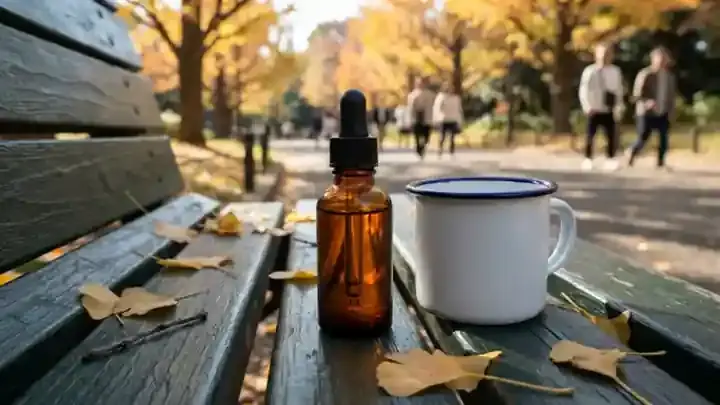
The name and the type. The front says GINKGO in big white letters, with Ginkgo biloba above it, and calls itself a "Liquid Extract" and an "Herbal Supplement."
It's made by Herb Pharm, and the label prints Williams, Oregon, the farm country Irene's cousin worked in. The company's mailing address today is in Central Point, a little north of Medford.
The ingredient line. One plant: ginkgo leaf, certified organic, in an extract.
That's the whole active line. There is no blend of eleven things, and no word on it I couldn't have found in my own field guide.
The amount. Here's the line I'd circle on a cruise sheet, because it's the first number on the panel: 660 milligrams of ginkgo leaf extract per serving of 0.7 milliliters.
Right under it, in smaller type, there's a second number that matters more.
"Extraction rate 140 mg herb per 0.7 ml," and a ratio of one part dry herb to five parts liquid.
In plain words, each serving carries the extract of about 140 milligrams of dried leaf. The 660 is the weight of the liquid extract, alcohol and all; the 140 is the leaf.
The other ingredients. Certified organic cane alcohol at 57 to 67 percent, distilled water and certified organic vegetable glycerin, and the label says it has no gluten.
That alcohol line deserves its own sentence, and I'll give it one below. It's the line a lot of readers will care about most.
The directions. "Shake well before using.
Adults: Add 1 squeeze of the dropper bulb to 2 oz. of water or juice, 2 to 5 times per day. Best taken between meals."
The count. "Servings: about 42" in the one-ounce bottle.
At two squeezes a day that's three weeks, and at five a day it's a little over a week. I'll draw that out for you in a minute.
The small words on the front. Under the name, the label says "Nervous System" and, in a blue band, "Mental Clarity," with an asterisk.
That asterisk walks you to the bottom of the label, which is where I'd send anybody.
There, in a little box, sits the standard sentence: the statement hasn't been evaluated by the Food and Drug Administration, and the bottle isn't meant to stand in for medical care.
I want to stop on that sentence, because most people's eyes slide right past it.
It's the most honest line on any supplement label, and it outranks every other line, including the name.
The seller's web page uses some confident language of its own about the leaf. I won't repeat it here;
I'll tell you what the research says instead, which is what the next section is for.
What the Studies Say About the Leaf, Shrugs Included
I spent four evenings at the county library, and Irene pulled the journals for me without once saying I told you so.
Here's what the file says, and I'm printing the shrugs in the same size type as everything else.
Start with the plainest page in the whole file. The National Center for Complementary and Integrative Health keeps a short page on ginkgo, written for the public. [1]
There is no conclusive evidence that ginkgo is helpful for any health condition.
Ginkgo may increase the risk of bleeding in people taking anticoagulants, and fresh ginkgo seeds are toxic.
— National Center for Complementary and Integrative Health, Plain-language summary of the research on ginkgo[1]
I respect that page enormously. A government office that prints "no conclusive evidence" about one of the most famous herbs in the world is an office I'll believe on other things.
Next, the biggest trial in the file. It's called the Ginkgo Evaluation of Memory study, and it's the one every honest article on this leaf ought to mention first.
It enrolled 3,069 adults aged 72 to 96 living in their own homes and followed them for a median of about six years.
Half took 120 milligrams of a standardized ginkgo extract twice a day, and half took a placebo. [2]
At the end, the ginkgo group did no better than the placebo group on tests of memory, attention, language, visual skills or planning.
Six years, three thousand people, and the two groups ended up in the same place. [2]
I'm putting that at the top on purpose. If a column about ginkgo doesn't tell you about those 3,069 people, it's not a column; it's a flyer.
Then a much smaller study, in people closer to my age.
Ninety-three healthy adults between 55 and 79 took 120 milligrams a day of a ginkgo extract or a placebo for twelve weeks. [3]
The ginkgo group did somewhat well on one kind of task, learning pairs of things and recalling them later.
On every other measure of attention, planning and thinking, there was no meaningful difference. [3]
One result out of many is a thin thread, and the authors said as much.
It's a reason to keep reading, not a reason to buy anything.
There's a third study people quote, and I want to be careful with it.
It gave 256 healthy middle-aged volunteers a capsule combining ginkgo extract with ginseng extract for fourteen weeks, and found a modest average improvement on a memory index. [4]
That's two plants in a fixed combination, given to people in middle age. Ginseng isn't in Irene's bottle, so that study belongs to a different product.
I mention it only so nobody credits this bottle with a result that belongs to a mixture.
I've seen that sleight of hand on other labels, and it's like a cruise sheet that counts the neighbor's timber.
And then the trial that surprised me most.
Ginkgo has been sold for years for the ringing some people hear in a quiet room, so British researchers ran a large, careful trial on exactly that. [5]
They gave 1,121 people either a ginkgo extract three times a day or a placebo for twelve weeks.
Afterwards, 34 of 360 people on ginkgo said the ringing troubled them less, and so did 35 of 360 on the placebo. [5]
Thirty-four and thirty-five. On a tally sheet, that's the same tree.
A Cochrane review later pooled the trials on that same complaint, 1,543 people across four trials, and found no evidence that ginkgo helped.
The same government page says so plainly too. [6] [7]
There's one more thing the file taught me, and it's about the amounts.
Every one of those trials used a standardized, concentrated extract, dried and measured to a fixed recipe, at 120 to 240 milligrams a day.
Irene's bottle isn't that. It's the leaf soaked in alcohol and water, about 140 milligrams of dried leaf per squeeze, and the label doesn't let anybody convert one into the other.
So I can't honestly compare a squeeze of this to a single trial in the file, and I won't.
The bottle is a traditional liquid extract of a leaf; the trials studied something else, and mostly found nothing.
So here's the whole file, written the way I'd summarize a cruise for the owner.
A famous leaf, a long tradition, two big trials that came up empty, one small trial with one bright spot, and no study at all on this particular bottle.
That's not a wonder. It's not a nothing, either; it's an honest one-herb extract with a plain label, from a company that prints its phone number and doesn't pretend to be medicine.
And for a man who needed a reason to walk eleven minutes to a bench every morning, an honest bottle turned out to be enough.
Two Ounces of Water, One Squeeze and a Bitter Little Cup
So I took the bottle down to the bench.
Here's the ritual, laid out the way I'd lay out a plot procedure for a new crew, because the ritual turned out to be most of the point.
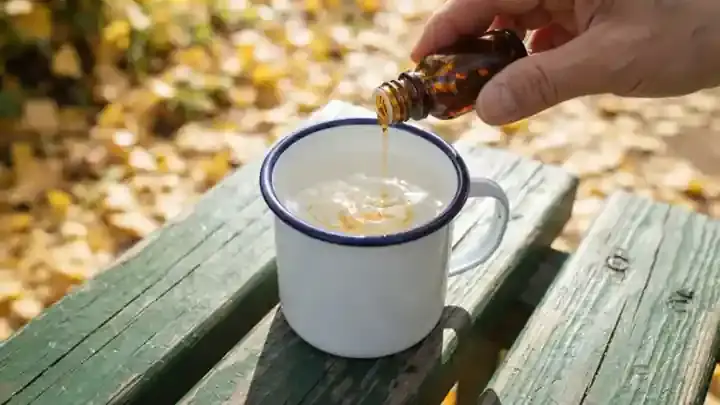
Step one: the cup. I use a white enamel camp cup with a chipped blue rim that has been in my truck since the Reagan administration.
The label says two ounces of water or juice.
That's about four tablespoons, a little less than a quarter of my camp cup, and I fill it from the drinking fountain by the courthouse steps.
Step two: shake the bottle. The label says shake well before using, so I give it a few turns of the wrist like a man checking a spray can.
Step three: the squeeze. One squeeze of the bulb, released into the water, and the water turns the faint color of weak tea.
Step four: drink it. The label says between meals, so mine is mid-morning, a good while after breakfast and a good while before lunch.
Step five: sit. This is the step that isn't on the label, and it's the one that matters most to me.
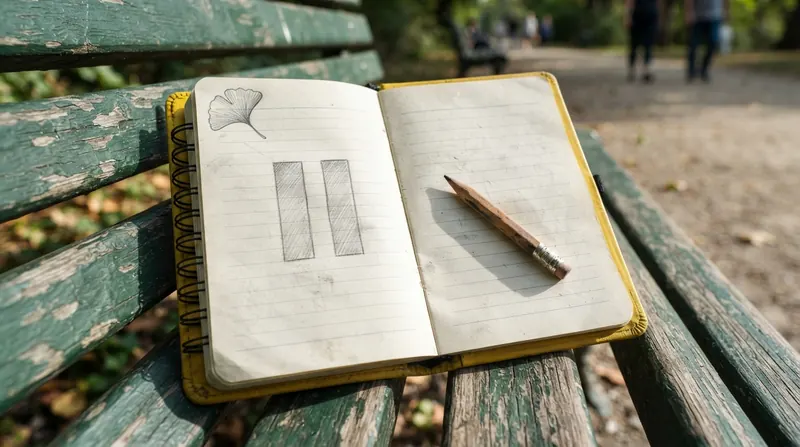
I sit on the bench under the tree with the field book open on my knee, and I don't get up until I've finished the morning's list.
I'll tell you about the list in a minute.
That's the whole procedure. No measuring spoons, no blender, nothing to swallow whole with a glass of water; just a camp cup, a squeeze, and the bench.
The taste, since everybody asks. It's bitter, and I won't dress it up.
It's a green, leafy bitterness with a warm bite of alcohol behind it, even diluted. Irene's card said it would taste like the coffee I complain about, and she was right.
For thirty years I drank coffee at fire camps and logging landings that had been on the stove since four in the morning.
You learned to drink it fast and think about something else.
The squeeze in two ounces of water tastes a lot like the last inch of that coffee. Bitter, honest, and gone in two swallows.
Marjorie tried it once and said it tasted like a lawn.
She meant it as a criticism, and I took it as a description, which is a fair summary of forty-four years of marriage.
One reviewer on the seller's page praised "the smooth taste," and I'll let that stand as proof that palates differ.
If you want sweet, put the squeeze in juice, which the label allows, and Kate swears by apple.
Six Things This Bottle Is Not, Tallied Before Anything Else
Before I tell you what the field book said after twelve weeks, I want to tally what this bottle is not.
On a cruise, the defect calls go on the sheet before the board feet, so nobody mistakes one for the other.
It is not medicine. It's the extract of a leaf, sold as an herbal supplement, with the standard FDA sentence printed at the bottom of the label.
If your clinician has you on anything daily, the squeeze sits beside it, never in place of it.
That line is underlined twice in my field book, and it belongs underlined in yours.
It is not something to swallow whole. There's nothing to count out of a bottle and chase with a glass of water; it's a squeeze of liquid in a small cup.
It is not alcohol-free.
The extract is 57 to 67 percent cane alcohol, and a single 0.7 ml serving carries roughly 0.4 ml of it, less than a sip of wine but not nothing.
If you avoid alcohol completely, for your faith, your health or your history, this isn't your bottle, and there's no shame in that.
Two of the men at the Grange breakfast skipped it for exactly that reason, and I'd have skipped it with them.
It is not for anybody on blood thinners without asking first.
The government page in my research file says ginkgo may raise the risk of bleeding in people taking anticoagulants. [1]
Marjorie takes one of those every morning, so the bottle lives on my side of the cupboard, and she doesn't touch it. That's not a footnote;
that's the most important line in this section.
It is not a standardized extract. The trials in the file used a dried, concentrated extract measured to a recipe, and this is a traditional liquid extract of the leaf.
And it is not the seeds.
The tree on the square drops seeds in some years, from the female trees in other parts of town, and the government page says fresh ginkgo seeds are toxic. [1]
The bottle is made from the leaf, which is a different part of the tree.
I mention the seeds only because a reader of this column will someday pick one up off a sidewalk.
My pharmacist at the Rexall on Main Street read the side of the bottle for me in about thirty seconds.
She said, "One herb, it's alcohol-based, and tell your clinician you're taking it," and that's exactly what I did.
Morning, Harlan. Marjorie's refill is ready whenever you're by.
9:05Thanks, after the bench, around eleven. I'll bring my bottle so you can read the side.
9:12Bring it. I'll check it against her list while you wait.
9:13That's why I asked. It stays on my side of the cupboard either way.
9:15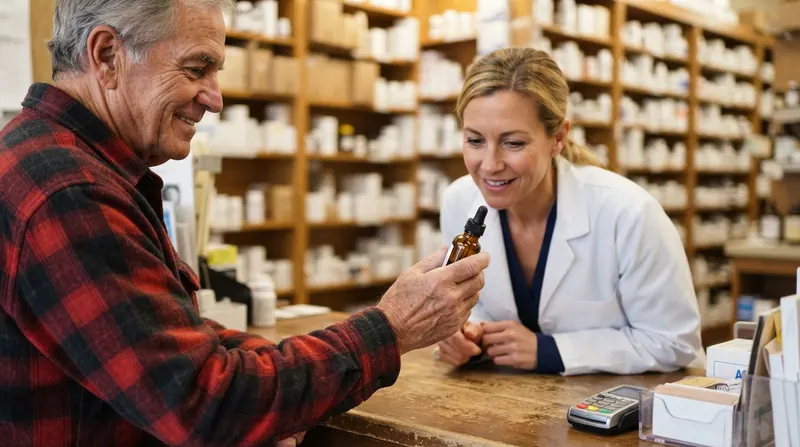
Ten Customers, Ten Five-Star Reviews, and What I Make of Them
I'm one man with one field book.
So I went looking for what other people had said about the same bottle, and I'll show you what the seller's review page displays, word for word.
When I read it in October, the ginkgo page showed 10 reviews, and all 10 gave five stars. In one corner of the store the header shows a different, larger count;
I'm going by the reviews actually printed under this bottle.
Ten reviews is a small stand. It's enough to tell you people like the bottle and the company; it's not enough to tell you much else, and I won't pretend otherwise.
Several of those ten reviewers write about their own heads and their own results, in their own words.
I've left those out on purpose, because one person's good month is not a finding, and I don't want anyone reading it as one.
Here are three of them. The photos beside each review are illustrative portraits, not the reviewers themselves;
the seller's page publishes first names and initials, not faces, and the words are theirs, copied exactly.

it is part of our daily supplements !

This is an excellent preparation of ginkgo biloba and I find it very effective.

Product is outstanding.
Read Michael's review twice, because it's the most honest one on the page. "It is part of our daily supplements."
That's not a claim; it's a habit.
"Our" tells you it's a household thing, a bottle on a shelf two people reach for, the way Marjorie and I reach for the coffee can.
Lynn's review is the one with the word everybody wants, "effective." I'll hold it the way I'd hold any customer's opinion:
it's one person's experience, in her own words, and it isn't a study or a promise about your head or mine.
What I'd underline in Lynn's sentence is the word "preparation."
That's a herbalist's word, the word for how a plant gets made into something you can take, and it tells me she knows what she bought.
Jeanie's three words are about the product, and I can vouch for the product.
The bottle arrived well packed, the label reads clean, and the bulb doesn't leak in a jacket pocket, which I tested by accident.
Here's how I read all ten together.
People who buy this bottle tend to like it and like the company, nobody on the page reported a bad experience, and the sample is too small to tell you anything more than that.
If ten reviews feels thin to you, you're right, and that's worth knowing.
A company that has sold liquid herbs for decades and shows you only ten reviews on this bottle isn't hiding a pile of bad ones;
it just doesn't have many on this page.
Twelve Weeks of the Morning List, Good Mornings and Bad
I started on Monday, January 5, the first week the bench was dry after the holidays.
I'd like to say I started out of hope, but I started out of stubbornness, because Irene was going to ask at breakfast.
And I added one thing to the bench that had nothing to do with the bottle. I started a morning list.
Every morning, after the squeeze, I named the trees on the courthouse square out loud, in order, walking the plot in my head.
Common name, Latin name, and one thing I knew about each.
There are twenty-three trees on that square, counting the young dogwood by the war memorial. On the first Monday, I got through nineteen before I had to look at my field guide.
The list was not a test, and I want to be plain about that.
It was a habit, the same as the bench and the cup, and a habit that gets practiced every morning gets easier for all kinds of reasons.
Harlan's field book, January to March
- Week 1Squeeze at the bench five mornings of seven. Nineteen of twenty-three trees named before the field guide came out. Marjorie said the cup "smells like a lawn."
- Week 2Nothing. Same list, same misses, same bitter cup. Wrote "nothing" four mornings running and nearly gave the bottle to Irene at breakfast.
- Week 3First margin note: "didn't reach for the guide until the sycamore." Went to the Grange breakfast two Thursdays in a row.
- Week 4Rain all week, bench too wet. Squeeze at the kitchen table, list from memory of the square. Lost the hornbeam twice.
- Week 6Named all twenty-three trees three mornings in a row. Said Gus's name before he said mine. Walked home the long way by the creek.
- Week 9Kate and the grandkids for spring break: no bench, no list for four days. Wrote "away from the plot" and didn't scold myself.
- Week 12Annual checkup, with the field book in my jacket pocket.
I want to slow down on week two, because it's the week most people quit.
Four lines in a row that say "nothing," in the handwriting of a man who already suspected he'd been talked into drinking a lawn.
What kept me going was what kept me on a cruise through every week of bad weather. You don't judge a stand by the first plot.
Week three is the margin note I'd circle. "Didn't reach for the guide until the sycamore."
For most of the year before, the field guide came out of my pocket by the third or fourth tree.
In week three it stayed in my pocket until the sycamore at the far corner, the twentieth tree on the list.
That's not a scientific measurement, and I won't let anybody quote it as one.
It's a pencil line written by a man who'd been practicing the same twenty-three trees every morning for three weeks, which is exactly how you'd expect a list to get easier.
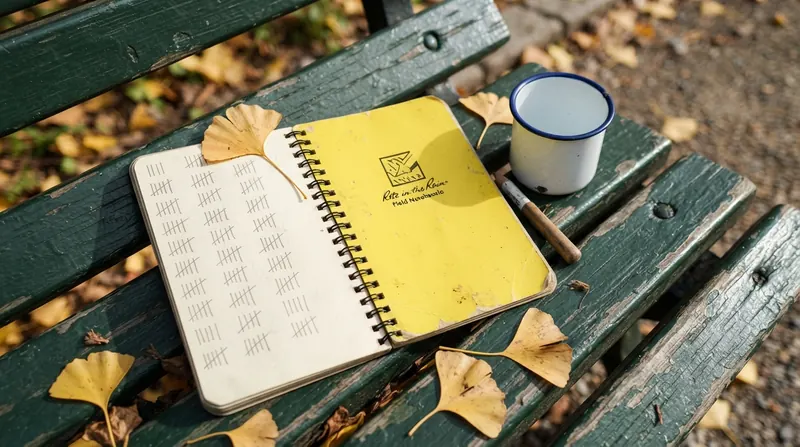
Week four was the rain, and I'm printing it because a field book that skips the bad week isn't a field book.
Five days too wet to sit, the squeeze at the kitchen table, and the list from memory of a square I couldn't see.
I lost the hornbeam twice that week, a tree I've known since forestry school.
I wrote it down both times in the same size handwriting as the good days, and on the sixth day the sun came out and I walked to the bench.
Week six is the one Irene asked to see at breakfast. Three mornings in a row, all twenty-three trees, common name and Latin name, and the field guide never left my pocket.
And on the Wednesday of that week I walked into the hardware store and said "Morning, Gus" before he said a word. I don't know what that's worth to anybody else;
to me it was worth the whole field book.
Week nine was the grandkids, four days of pancakes and board games and nobody near the bench, because the bench was a long way from the trampoline.
I wrote "away from the plot" on each of those lines and didn't scold myself once. A good cruiser knows the difference between a bad plot and a day off.
Dad, Marjorie says you've been on that bench every morning. Even in March?
4:31Every dry morning, twenty-three trees, Latin names and all. The squeeze is bitter but the bench is good.
4:40Did you tell your clinician about the bottle?
4:41Checkup is the 30th. It's in the field book, top of the page, so I don't forget to say it.
4:43
What the Clinician Said About Twelve Weeks of the Field Book
At the end of March I went to my annual checkup with the field book in my jacket pocket and a sharpened pencil in case anybody needed one.
My clinician is a careful young man who listens before he types.
I told him about the maple, the keys, Gus, the list on the back of the envelope, and then I told him about the bottle.
He read the side of it, the way Dana had, and asked what else I took.
Then he asked the questions he asks, wrote some things down, and said that from what he'd seen and heard that morning he had no particular concerns.
"Keep walking to that bench," he said. "Keep going to breakfast, keep doing the crossword in pen if it makes you happy, and tell me if anything changes."
Then I handed him the field book, and he read three pages of it without saying a word, which in a twenty-minute appointment is a long time.
"You walked to the bench sixty-one mornings," he said finally, "and you went back to that breakfast. Those are the two lines I'd keep."
And here's the most honest sentence I can write about the bottle: I can't tell you which line did what.
In twelve weeks I walked eleven minutes each way most mornings, practiced the same twenty-three names, went back to a table full of people, drank a bitter cup, and stopped leaving my keys in the bread box.
Any one of those could be the reason the mornings felt clearer, or all of them together, or simply a good winter.
What I can tell you is the order: the bottle didn't walk me to the bench; the bench is what I walked to.
Irene wrote that after she counted. I hadn't counted; Irene counts everything, including the number of times I said "partner" at the Grange in November, which was nine.
And notice the order she put it in: the bench, the breakfast, the checkups. The bottle comes along; it never drives the truck.
Where the Squeeze Actually Fits in a Day
People ask what a day looks like now, as if there were some grand new routine. There isn't, and that's the point.
6:30 a.m. Coffee with Marjorie at the kitchen table, the real kind, which is not negotiable and never will be.
Then the keys, which go on the nail by the back door. I say "nail" out loud when I hang them, which Marjorie finds very funny.
9:30 a.m. The walk to the square, eleven minutes, past the feed store and the Methodist church and the house with the three-legged dog.
9:45 a.m. The bench, the camp cup, the drinking fountain and one squeeze, then the list, twenty-three trees, and whatever the tree on the corner is doing that week.

Tuesday and Thursday, 10:15 a.m. Irene arrives with her thermos, and we talk about whatever she's reading and whatever the tree is doing.
Thursday, 7:00 a.m. The Grange breakfast, which I haven't missed since November unless Kate's in town.
Evening. The Sunday crossword in pen, a page of the field guide before bed, and a second squeeze some days, mid-afternoon, between lunch and supper the way the label says.
That's why I trust it, honestly. A habit that asks for a squeeze, two ounces of water and a bench you already like is a habit you'll still be keeping in October.
The cartoon owl asked for my attention every hour and lasted seven weeks. The coffee pods asked for my sleep and lasted ten days;
the bench asks for eleven minutes of walking, and it's lasted ten months.
How to Keep a Morning List Like a Timber Cruiser
More readers have asked me about the list than about the bottle. So here's the method, exactly as I keep it, and it works with or without anything in the cup.
Pick a plot you can walk to. A park, a church lawn, a block of front yards, anywhere with a dozen or more things you can name: trees, birds, storefronts, neighbors' dogs.
Name them in the same order every time. A cruiser walks the line the same way every plot; the order is what lets you notice when one goes quiet.
Say them out loud. Saying a name is a different job from thinking it, and it's the job we fumble at the hardware store, so practice that one.
Add one fact to each name, like "Sycamore, Platanus, bark like a camouflage jacket." The fact gives the name something to hang on, like a key on a nail.
Write down where you stalled, not just how far you got. "Lost the hornbeam" is an entry;
"bad morning" is a feeling, and feelings don't add up at the end of the month.
Write the bad mornings in the same size handwriting as the good ones.
That's the rule most people break, and it's the rule that makes the book worth carrying.
Take it to your checkups. My clinician read three pages in March, and he said it told him more about my mornings than any question he could have asked in twenty minutes.
That last rule is the reason I'd keep a field book even if I'd never seen Irene's card.
Twenty minutes goes a lot further when you walk in with twelve weeks of pencil.

What Readers Wrote When This Ran as a Short Column
A shorter version of this column ran in the spring. The comments were better than the column, which is usually how it goes.
The comments below are illustrative, retold from reader notes with names shortened. Replies sit indented under the comment they answer, and they're here because they ask what you're probably asking.
Carol's comment is the one I've thought about most. "Blamed his hearing aids."
I did the same thing with the Grange breakfast. We invent a respectable reason, because the real one feels like a confession, and a confession at our age feels like a verdict.
And Helen's comment is the reason I'd print the blood-thinner paragraph again tomorrow, in bigger type.
Whatever you try, take the bottle to your pharmacist first, and say the name of everything else you take out loud.
Irene and I, Recorded for the Library's Tape Shelf
In September, the county library asked whether Irene and I would sit for its "Oral History Hour," the shelf of recorded conversations it keeps about the town.
Irene said yes before I could say no.
We recorded it on the bench, under the tree, with a little recorder on the slats between us. Here's the transcript, trimmed only for the part where a dog stole Irene's muffin.
Oral History Hour · The Bench Tapes, No. 12
A Timber Cruiser, a Librarian and the Oldest Tree on the Square
Harlan
host
Irene, the library wants to know why a reference librarian pressed a ginkgo leaf in a timber cruiser's field guide.
 Irene
guest
Because you'd stopped coming to breakfast, and you're the only person at that table who knows what the trees on this square are called. I wanted you back for purely selfish reasons.
Harlan
host
And the card? You could have brought me a pie.
Irene
guest
A pie is for after something bad happens, and a card is for before. I gave you a call number: a leaf from the tree you already sit under, one squeeze in a little water, and a reason to walk here in the morning.
Harlan
host
I looked it all up, you know, the way you told me to. The six-year study found nothing, the ear trial was thirty-four against thirty-five, and the one with good numbers had ginseng in it.
Irene
guest
I never told you it was in a study. I told you to read it before you believed me, and you did, which is more than most of my patrons ever managed.
Harlan
host
Fair enough. So tell the library the honest version: what does the bottle do?
Irene
guest
It tastes like your camp coffee and costs about forty-five cents a squeeze. For twelve weeks it sat on this bench with you while you named twenty-three trees out loud and went back to breakfast, and whatever your mornings feel like now, you earned most of it with your feet.
Harlan
host
And what would you tell somebody standing in their own yard right now, waiting for the name of a tree?
Irene
guest
Go find a bench and a list, and go back to wherever you stopped going. And if you take anything that thins your blood, show the bottle to your pharmacist before the first squeeze.
Irene listened to the recording afterward and asked for one correction. She wanted it on the record that the muffin was blueberry and the dog was not sorry.
I've gone back to that last line of hers more than any other. "Go back to wherever you stopped going."
1 oz liquid extract · about 42 servings · read the return terms before ordering
The Return Terms, Read Like a Timber Contract
Now the part most columns skip, and the part I'd have read first on any timber sale: what happens if you don't like it.
I want to be very plain here, because this is where a lot of supplement companies get slippery.
This seller publishes two return pages, and they don't say quite the same thing, so I'll give you both.
The "Shipping & Returns" page says you can send the bottle back within 30 days, with proof of purchase, for a replacement or a refund of the purchase price.
It adds that you call customer service at 800-348-4372 for a return authorization number before you mail anything.
It also covers a bottle that arrives damaged, defective, tampered with or past its date.
The separate "Refund policy" page says you can return the product for a replacement or a credit, and that you notify them within 30 days of purchase to receive a full credit.
A refund and a credit are not the same thing, as any man who's ever returned a chainsaw knows.
If that difference matters to you, call the Oregon number before you order and ask which page they go by.
Mistakes on their end: the refund page says they'll gladly accept returns caused by their error if you notify them within 7 days of receiving the order.
Here's what I'd actually do, as a man who spent forty years telling landowners to cruise a small plot before they sell the whole section.
Start with the one-ounce bottle, $18.98, about 42 servings.
Forty-two servings is two to three weeks at the low end of the label.
That's enough to find out whether you can live with the taste, and whether a bench and a list fit into your mornings.
The company is Herb Pharm, and it prints a mailing address in Central Point, Oregon, on its contact page and an older address in Williams on the label.
It publishes an orders line, 800-348-4372, and an information line, 541-846-6262, staffed weekdays from 7 to 4:30 Pacific.
A street address, a phone number that a person answers, and return terms with real words in them.
My checklist for any outfit bidding on a timber sale was three lines long, and this bottle ticked all three before I got to the taste.
Shipping, for the record: orders over $59 ship at no charge after discounts, and the shop says orders are prepared in one to three business days.
Ten Letters That Came to the Bench
After the short column ran, I got more letters than I've had since my retirement party. I've answered the ten that asked what most of the others asked.
The letters below are illustrative composites, retold from reader notes with names shortened. The answers are mine, the same ones I'd give on the bench.
Short answers to the questions I get on the bench
How do you take it?
One squeeze of the bulb into 2 ounces of water or juice, 2 to 5 times a day, between meals, shaking the bottle first, per the label. I take one squeeze mid-morning in a camp cup, and some days a second mid-afternoon.
What does it taste like?
Bitter and leafy, with a warm bite of alcohol even diluted. It reminds me of the last inch of fire-camp coffee; one reviewer called it smooth, and juice softens it.
Is there alcohol in it?
Yes, the label lists certified organic cane alcohol at 57 to 67 percent, so a 0.7 ml serving carries roughly 0.4 ml of alcohol. If you avoid alcohol entirely, skip this bottle.
How much ginkgo is in a serving?
The label prints 660 mg of ginkgo leaf extract per 0.7 ml, with an extraction rate of 140 mg of herb per 0.7 ml at a 1:5 ratio. It's a traditional liquid extract, not the standardized extract used in the big trials.
How long does a bottle last?
About 42 servings in the 1 oz bottle: three weeks at two a day, two weeks at three, a little over a week at five. The 4 oz bottle holds about four times as many.
Will it bring the names back?
Honest people can't promise that, and the label carries the FDA statement saying its claims haven't been evaluated. The large trials in the research file found no difference from a placebo, and this bottle hasn't been studied on its own.
Can I take it with a blood thinner?
Ask first. The government page on ginkgo says it may raise the risk of bleeding in people taking anticoagulants; take the bottle to your pharmacist and tell your clinician before the first squeeze.
Is it organic?
The label shows the USDA Organic seal and lists the ginkgo leaf, cane alcohol and glycerin as certified organic, certified by Organic Certifiers.
Who makes it, and how do I reach them?
Herb Pharm, 5448 Bierson Way, Central Point, Oregon 97502. Orders 800-348-4372, information 541-846-6262, weekdays 7 to 4:30 Pacific; email info@herb-pharm.com.
What if I don't like it?
Within 30 days, call for a return authorization number; one seller page says replacement or refund, the other says replacement or credit, so ask which applies.
Who This Bottle Is For, and Who Should Pass
I wouldn't close a cruise without a recommendation, so here's mine. Fair notice: half of it tells some of you not to buy.
It probably makes sense to look at it if:
- You want a small daily habit with a reason to get out of the house, and you already have a bench, a porch or a park in mind
- You'd rather read one plant on one line than a blend of eleven things you need a dictionary for
- You can live with a bitter taste, or you're happy to take it in a little juice
- You don't take anything that thins your blood, or your pharmacist has already looked at the bottle
- You'll keep a list or a notebook and take it to your next checkup
It probably isn't for you if:
- You want a promise about names, keys or lists; the big trials found no difference from placebo, and the label's FDA line says so
- You avoid alcohol for any reason; the extract is 57 to 67 percent cane alcohol
- You take a blood thinner and haven't asked your pharmacist or clinician yet
- You want a standardized extract like the ones in the studies; this is a traditional liquid extract of the leaf
- You're expecting or nursing; take any herb to your clinician before the first serving
That first line on the second list matters most.
This is a squeeze of a leaf in a little water, not a plan; the plan is whatever you and your clinician write down together.
What a Squeeze Costs Against What I Already Spent
Now the money, because Irene made me promise I'd put it in black and white. The one-ounce bottle is $18.98 for about 42 servings.
That works out to about 45 cents a squeeze. For comparison, the coffee pods were about $1.20 a cup, and the cartoon owl cost me $7.99 a month to match shapes.
I'm not saying the $90 was wasted because the squeeze is cheaper.
I'm saying the $90 was aimed at my kitchen table, and the 45 cents comes with an eleven-minute walk to a bench.
If the bottle suits you, the four-ounce size brings the squeeze down to about 34 cents.
If it doesn't, the one-ounce bottle is the cheapest way to find out, and I'd start there.
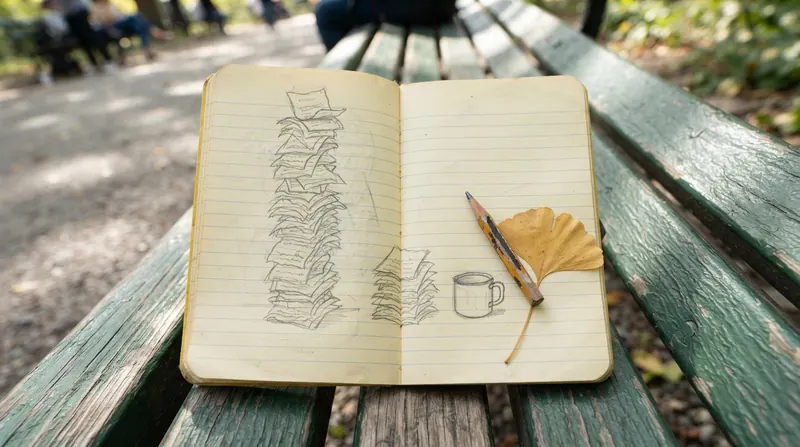
Where the Bottle Stands, Line by Line
Here's the summary I'd staple to the front of the cruise report. If you only remember one part of this column, make it this one.
✓ One plant on the label, ginkgo leaf, certified organic, with the amount printed: 660 mg of extract and 140 mg of herb per 0.7 ml serving.
✓ About 45 cents a squeeze, with a one-ounce bottle for finding out whether you can live with the taste, and an Oregon phone line and mailing address on the seller's pages.
✓ A habit that fits a morning: a camp cup, two ounces of water, one squeeze and a bench, nothing to swallow whole and nothing to measure past a squeeze.
✓ Ten reviews, all five stars, including a plain one from a household that keeps it with its daily supplements.
✗ The research on the leaf is mostly empty.
A six-year trial of 3,069 people found no difference from placebo, the ear trial came out 34 to 35, and the government page says there's no conclusive evidence. [1] [2] [5]
✗ No study on this bottle, and it isn't the standardized extract the trials used, so no honest comparison to any of them is possible.
✗ It's alcohol-based, and it isn't for blood thinners without asking. Both lines are on the government page or the label, and both deserve to be read twice. [1]
✗ Two return pages that disagree on whether you get a refund or a credit; call before you order if that matters to you.
If You're Standing in Your Own Yard, Waiting for a Name
I can't tell you what to do.
I can tell you what I'd do if I were reading this column instead of writing it, back last October with a rake in my hand.
First, before you buy anything at all: find a plot you can walk to, and start a list. Trees, birds, storefronts, the dogs on your block, anything with names.
Second: go back to wherever you stopped going. The breakfast, the coffee, the club, the pew, whatever it was you quietly dropped because of the names.
Third: tell your clinician what you've noticed at your next checkup, and bring the list. That's the column mine cared about most, and it costs nothing.
And fourth, if you'd like something in the cup and your pharmacist has looked at your list: read the label I've been describing for ten thousand words.
One herb, one squeeze in two ounces of water, about 45 cents a serving.
I won't pretend a link at the bottom of a bench column is anything but a door to the seller's shop. The Ginkgo Corner doesn't keep inventory; we keep field books.
But if you walk through that door, you'll know exactly what's on the other side: one plant, a bitter little cup, two return pages you've now read, and an Oregon phone line.
Ginkgo leaf liquid extract · one herb on the label · start with the 1 oz bottle if you're unsure
One more thing, and then I'll let you get to your own morning. The field book is still in my jacket pocket, and the tree on the corner is turning again.
Yesterday's line reads: "Oct 25. Bench 9:45, one squeeze.
Twenty-three of twenty-three. Gus at the store, first name, before he said mine.
Ginkgo going gold at the top. Breakfast Thursday, my turn to bring the jam."
Twenty-three of twenty-three. Four words, in pencil, written by a man who once stood a full minute in his own yard waiting for the name of a maple.
P.S. Irene's pressed leaf is taped inside the cover of my field guide now, faded from gold to the color of old paper, and if you have an Irene in your life, thank her; if you are the Irene, press the leaf anyway.
P.P.S. Remember the order Irene wrote in the back cover, the bench, the breakfast, the checkups: the bottle is the smallest of the four, and it's the only one that comes in a box.
The full ingredient guide, with a note on the ginkgo leaf, the alcohol base and on reading the advertising around this bottle, is linked at the foot of this page.
First, the people: Harlan Teague is a pen name. Irene, Marjorie, Kate and the courthouse square are composites, the way small-town columns have always been written.
Everything about the bottle itself, its label, its price, its directions, its reviews and its return terms, comes from the seller's own pages, read in October 2026.